Enhancing understanding: the power of metaphor

James Geary beautifully illustrates the power of metaphor in this 10 minute talk. The learning implications this talk has for me is to reflect on the ability of teachers to present quality explanations as part of our creative-thinking pedagogy. After all, as Geary says, “metaphor is a way of thought before it is a way with words.” Geary reminds us of Aristotle’s definition of metaphor as, “the process of giving the thing a name that belongs to something else.”  Music, literature, drama, poetry and art all depend on the power of metaphor to (a) communicate depth of meaning and (b) enhance understanding of the audience, listener or viewer.


In our very own theatres of learning, how well we explain things is possibly the difference between whether a learner ‘gets’ something and enjoys the progression in their thinking that results or remains insecure in their understanding to the point of being lost and confused. To develop our metaphorical powers, therefore, is to develop our ability to communicate concepts in such a way that we can be assured that our teaching has a positive impact on learner progression.


As Geary explains, metaphor both DETECTS & CREATES meaning…so we need to use it to it greatest effect.  We instinctively both seek and find a relationship between ideas, objects, colours, sounds and so on. Often that relationship is anchored by our own experiences; a compelling argument for starting any learning experience with the learner and building out from here. So we need to make our learning environments safe enough to regularly bring students’ own loves, likes, dislikes, memories and so on, into our lessons.


Perhaps, then, metaphor is the way to reach learners who are struggling to understand and recall complex ideas, processes and concepts. Considering this against the backdrop of fostering creativity in learning, it would seem that taking time to develop our metaphorical teaching pedagogy the design of learning experiences would be a worthwhile endeavour.


If Geary’s reference to Einstein is anything to go by, “Combinatory play seems to be the essential feature in productive thought.” (Einstein) there’s a whole dimension to the way in which we explain things that could be investigated and developed. At its simplest level, what additional props, links and connections we might make use of to enhance powerful learning experiences is certainly worth developing in greater depth. 


So what metaphors might we provide the next time we introduce a new topic? 

What images, music, experiences, or heroines might help learners grasp complicated processes? 

What skills in metaphorical analysis could we ask learners to undertake so that they deepen and consolidate their knowledge and understanding?

What metaphors can we use that both detect and create meaning?

What metaphors could our learners develop to enhance their understanding and push their learning on?


This one is a tough one but one that I’m going to give a lot more thought. Your comments would be appreciated…


James Geary has a new book out, “I is an Other: The secret life of metaphor and how it shapes the way we see the world”.


James Geary’s Prezi presentation adds an additional layer of understanding to his talk by requiring us to both watch and listen to his talk. There’s also an interview with him on the Prezi blog.


Blooming marvellous!

I love Twitter! I have so much to thank it for. Not least, for the fact that it has connected me with so many amazing people, their inspirational ideas, resources and on-going support. Today, I am particularly grateful for my connection with Cristina Milos @surreallyno and her wonderful blog “ateacherswonderings”. Cristina teaches in an IB school in Romania and she is whole-heartedly committed to engaging her own creative powers to grow the creative powers of her pupils.

Today, after Cristina had commented on a TEDucation post I’d just published, I followed a link to her blog, and came across this great book that she had come across on Storybird by the amazing janeh271 (if you click on her name, you’ll get to see her other great works – well worth a read!). It  explains Bloom’s taxonomy in the most engaging & accessible way. I hope you enjoy it and can use it. Thank you Cristina, thank you Twitter and my Personal Learning Network. A good day to be connected today.

It’s all about learning…

Learner Voice: The power of being childish

Adora Svitak argues for MORE childish thinking, opportunities to embrace exciting, bold ideas and, most of all, optimism. Isn’t that one of the things that we tend to lose as we grow up? We all know that creativity is all too often educated ‘out’ of us, agreed. Within the loss of creativity, perhaps what we really lose is that tiny little nugget, glinting like a precious stone, known to us all as ‘optimism’.

When we are being childish in our thinking, what changes from when we are thinking the mindset of our chronological and intellectual age?

What characterises childish thinking and how can we do more of it, for ourselves, as educators?

What would happen if we planned our curriculum applying childish thinking and looking for opportunities for play, experimentation and exploration in the learning opportunities that we design?

Perhaps Adora’s call for reciprocal teaching is what we really need to take on board. So what’s our start point? Well, we could just ask, sit back, shut up and listen. Oh, and then have the courage to take action, informed by what we have heard. I’ve taken a whole load of ideas and had my thinking reinforced by much of this talk, but most of all, if I am to take just one thing away from Adora’s words, talk, it’s when she says, “To show that you truly care, you listen.” 

I’d be interested in what you think about what Adora says here too. Please leave a comment.


Visual Thinking: creatively powerful ways to explain information

David McCandless brings data alive with his infographics. Since this talk, infographics and data visualisations have become pretty mainstream in the media. For me, the potential of explaining mathematical processes and concepts, collections of data and highlighting key pieces of information through a powerful visual medium is something that we could challenge ourselves, as teachers, to do for our students. In addition, it’s something that we could ask our students to develop as a skill for themselves. It certainly offers students a fantastic opportunity to freely express themselves in an individual and creative way, whilst at the same time, having to really get to grips with the information they are handling. 

I’m working on a series of ‘how to’ guides for teachers…if you have any ideas or links that would help me out with this, please leave a comment and I’ll get on to it! In the meantime, enjoy this talk and check out www.informationisbeautiful.net.


Every link is a new idea (New video from Michael Wesch)

Not only applicable to university, but to all phases of education. Michael Wesch (@mwesch) is the originator of “A Vision of Students Today”, which went viral a few years ago and if you haven’t seen it, it’s well worth a watch as a staff meeting.

Here are six minutes of his latest insight worth reflecting on…enjoy. I love the concept of  ‘peer production’ as a ‘movement’, resulting from Web 2.0 opportunities for knowledge construction.


Success: The power of coaching with growth mindsets

This thoughtful talk by John Wooden gives some valuable insights into ways in which we can get the best out of our learners. John Wooden is referenced in a number of books I’ve read recently, including Carol Dweck’s “Mindset: The new psychology of success” and Daniel Coyle’s “The Talent Code”. There are some great links between his words and the work that Dweck, in particular has developed. I met with a teacher recently who is working to develop a whole-school culture of growth mindsets, with teachers, students and parents & carers alike.

I am excited to see what the change will be as a result of this very deliberate work. It would be great to hear from other schools who are embarking on similar journeys, so please leave your comments below for everybody to share.

This talk is pretty much an all-encapsulating journey into the mind of a powerfully inspirational coach. Sit back and simply immerse yourself in the experiences and love of learning that he shares here.

What Ofsted says Gifted & Talented Provision should look like

I rarely blog about documents.

Actually, I never do. So this is a first.

The reason for the inclusion of this particular one is the hugely positive reception it has received from the teachers I’ve been working with. We have been focusing on ways to use whole-school gifted and talented provision to develop quality teaching and learning and this document has proved to be a very useful way to consider what it looks like when it works.

So I thought it might be useful to post here.

See what you think of it.

gifted_and_talented_pupils_in_schools_ofsted_dec09.pdf
Download this file

JK Rowling and The Power of Failure

I came across JK Rowling’s Harvard Commencement Speech whilst doing some background research into Carol Dweck’s Mindset work. There’s some great resources there (just click on the link) if you want to do any work with learners on the power of failure here. But, if you can possibly spare 25 minutes or so, I highly recommend that you make yourself a cup of tea/ coffee and take some time out to enjoy this inspirational speech. Then you might want to show it to some students…

Visual Study Skills: bringing words and pictures together (pt2)

Sunni Brown’s TEDx talk needs to be linked up with her great article entitled, “The Miseducation of the Doodle” (you can follow her on Twitter @SunniBrown) all of which are great for the linking of pictures and words. It ties in with some work I am currently developing around how we design learning opportunities that foster visual thinking to represent information. There’s much to this, plus all the joys you’ll find in the field of infographics and a whole host of visual interpreters who are developing their techniques in an effort to make sense of the enormity of the information available to us in the digital world.

I’m sure I’ll find some more links to bring it together. But for now, it makes me think that this is an area that I need to spend more time on when I’m designing learning. One of the integral qualities of a discerning learner is their ability to sort, sift and select the most meaningful tenets of information so that others might access the knowledge that they have discovered, re-interpreted or even created from scratch. For me, this demands that we consider the ways in which we offer opportunities to our learners to be able to present their information. Such presentations of understanding can certainly serve as a valuable and public validation of learner-thinking. In addition, such visual presentations will help to consolidate their own knowledge and deepen their understanding.

The importance of being able to identify the relationships between concepts, ideas and knowledge is a valuable part of the process of understanding. To do this visually not only provides us with the opportunity to ‘show’ our thinking, but enables us to create a very uniques and personal expression of our understanding. With a class full of 30 students, the diversity of the individual expressions is a discussion point in itself. It’s a bit more than thought-showers and mind maps and, as such, seems to be something that I can certainly consider designing as a focus area for deliberate practice in lessons.

Sunni Brown is a business owner, creative director, speaker, and co-author of one of Amazon’s Top 100 Business Books in C&I titled GameStorming: A Playbook for Rule-breakers, Innovators and Changemakers. She’s best known for her large-scale live content visualizations at meetings and events, and she is also the leader of The Doodle Revolution—a growing effort to debunk the myth that doodling is a distraction. She plans to teach the world how to master “strategic doodling” in her 2nd book, The Doodle Revolution.

Creative thinking: Reflecting to bring words and pictures together (pt1)

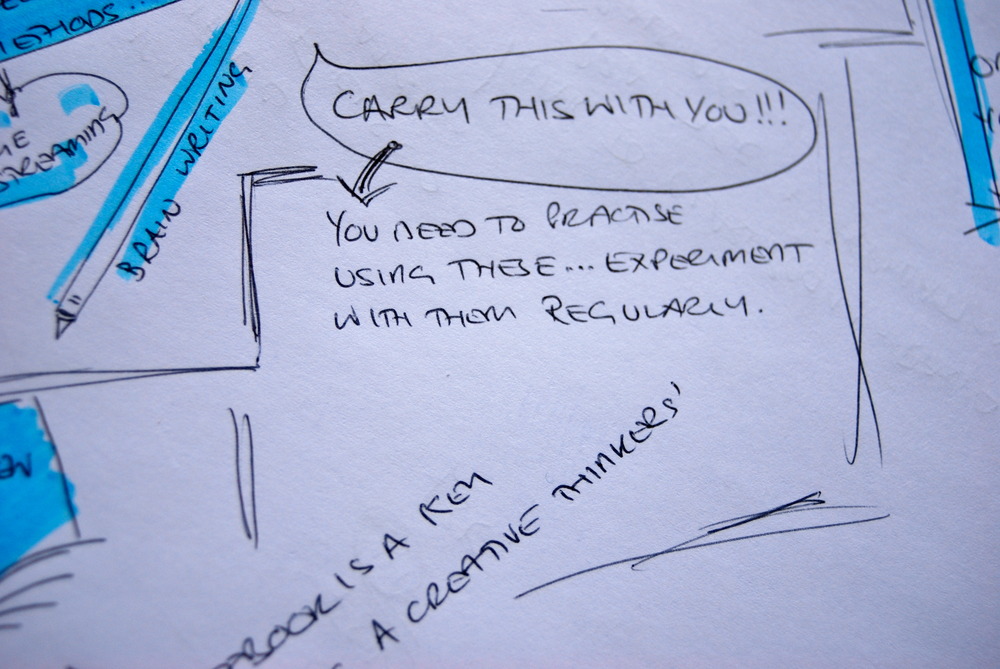
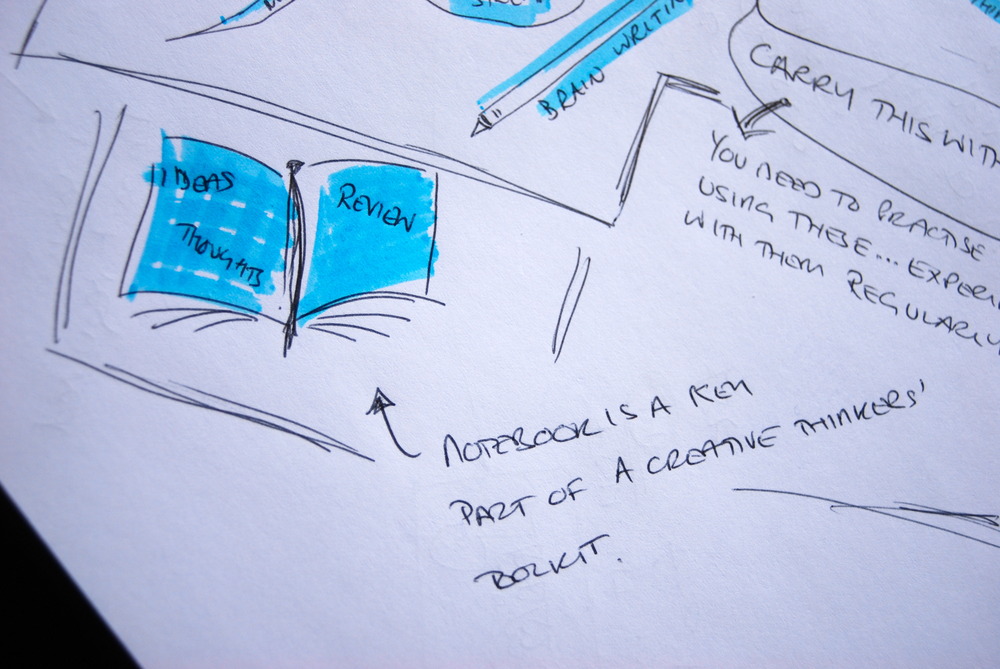
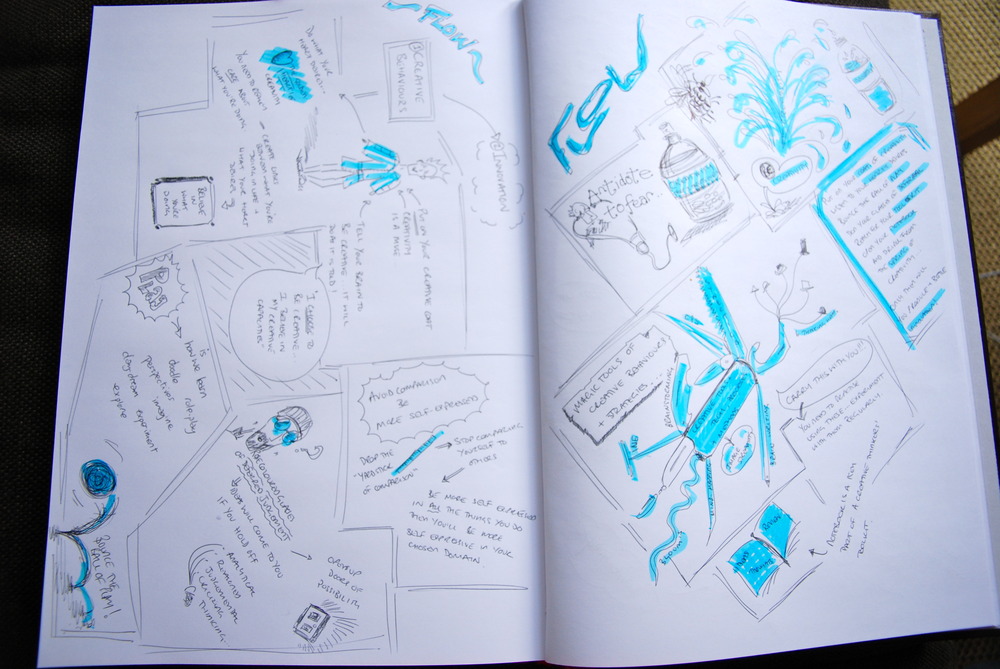
Here is Gregg Fraley @greggfraley speaking at TEDx hosted by NASA.  Whilst I listened, I doodled…only to find that one of his key recommendations was to purchase and use a notebook to capture random thoughts and ideas as we go through the day. How good did THAT make me feel?!

The time when I am able to work from home is precious. It gives me the opportunity to immerse myself in readings, resources and videos that push my thinking forward. It turns out that what I’m able to do during this time is develop my creative behaviours. It makes me consider the age-old tension that we all face between achieving curriculum coverage and offering opportunities for deep thinking.

Trying to design opportunities for learners to respond personally to the issues and concepts they encounter is, without doubt, one of the toughest challenges when it comes to carving up a fifty minute block of time into meaningful learning ‘chunks’.  Perhaps one answer is the development of doodle-techniques, just as I have tried here whilst listening to the talk. We know that the majority of information we encounter is channelled through our visual receptors, so having a focus on making connections between the visual and cognitive parts of our brains is something that deserves more time?

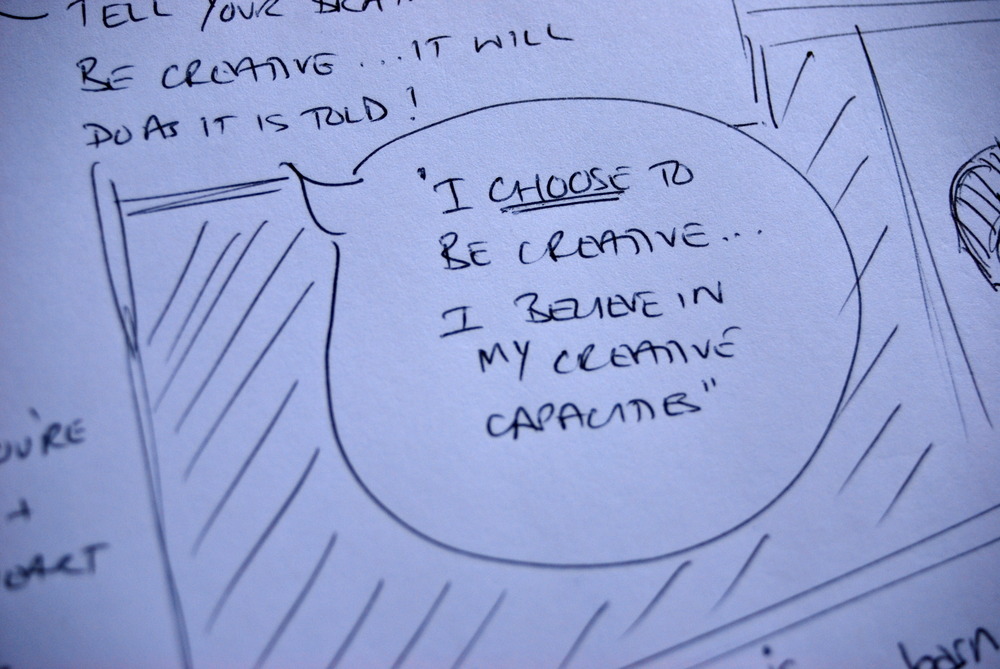
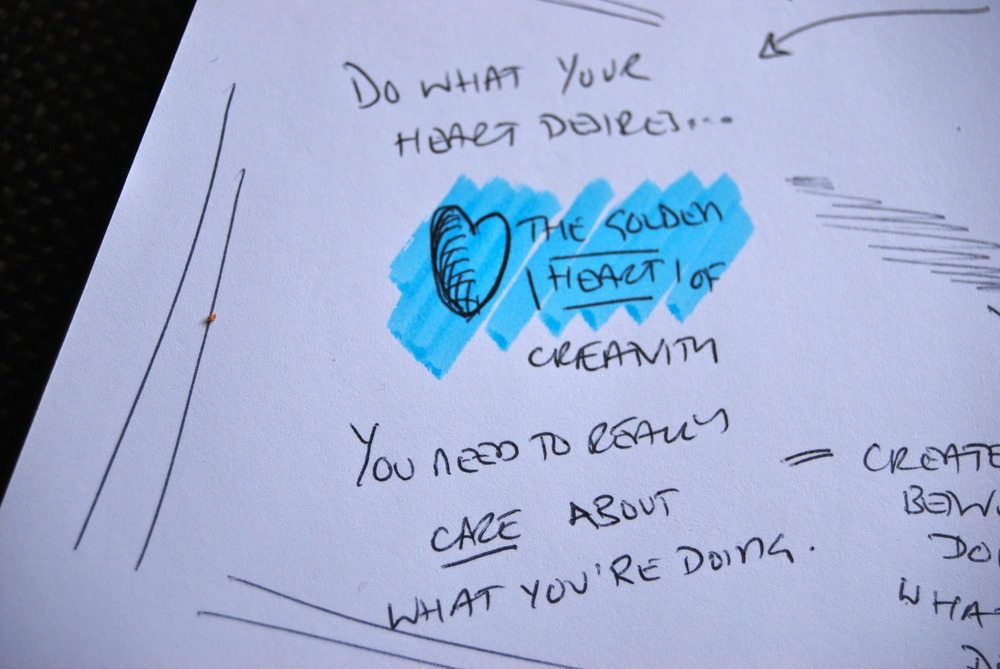
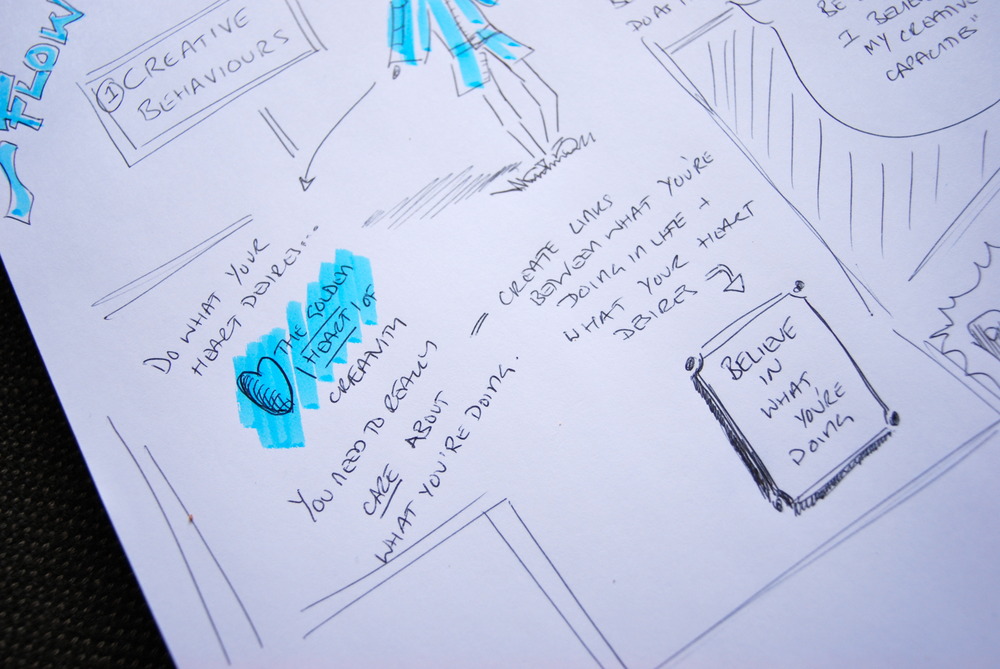
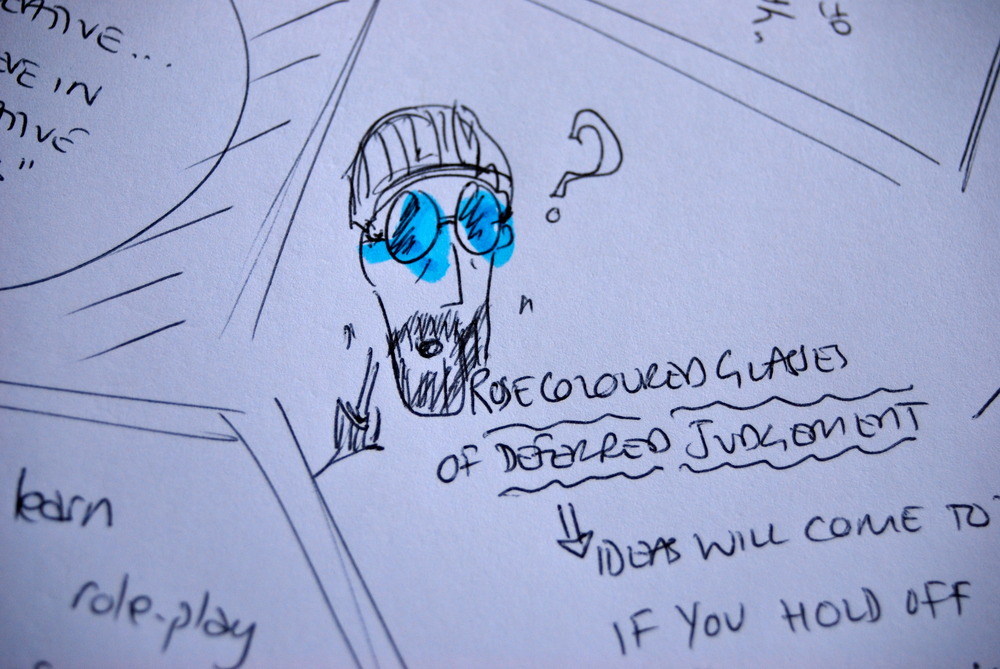
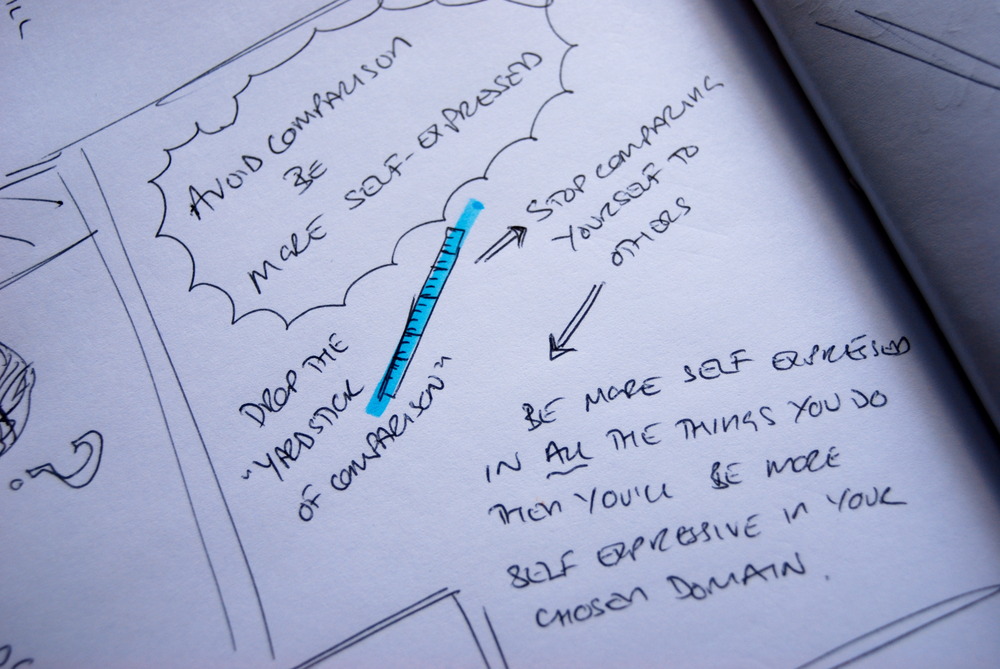
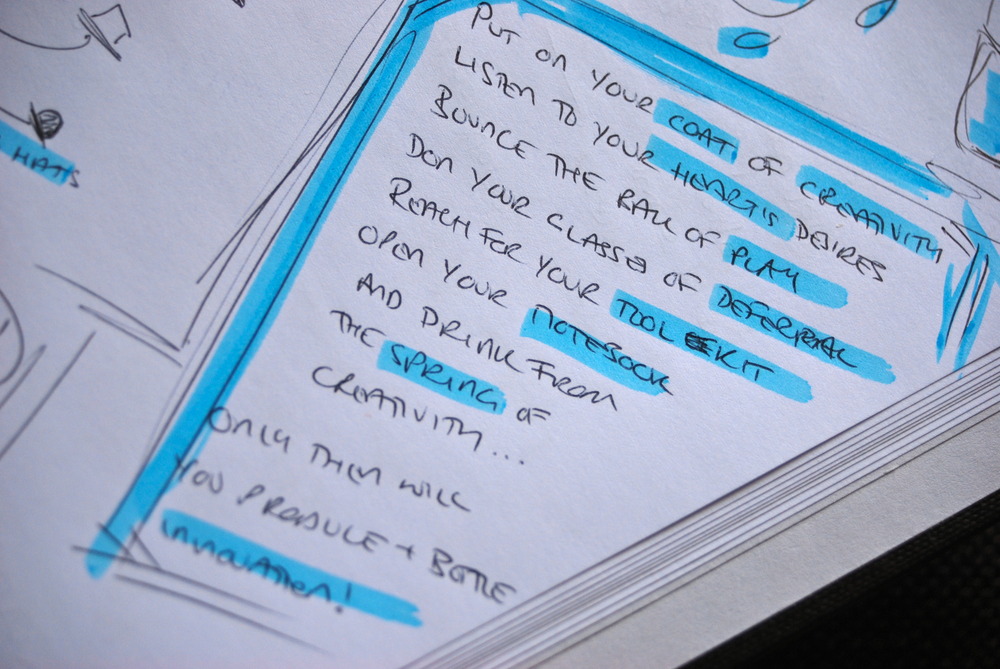
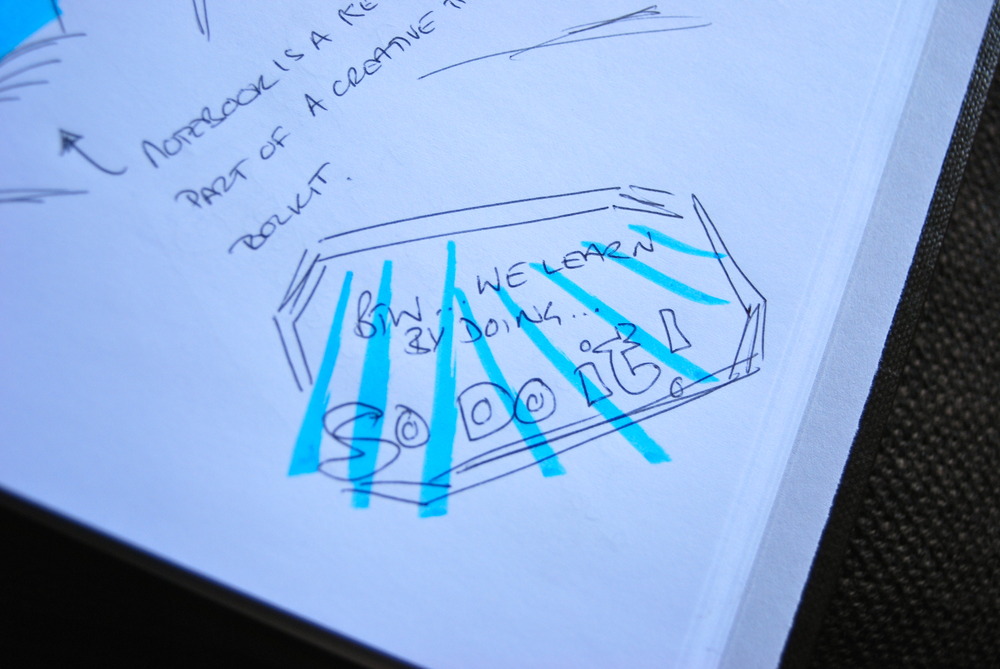
Watch and enjoy…my sketches are below (ordinarily, I wouldn’t have included them, as I don’t feel that they are ‘good enough’. If you wacth the TEDx Talk, however, you’ll see that I have had the courage to remove the “YARDSTICK OF COMPARISON”. I found that they are perfectly valid forms of my self expression – thanks, Gregg!).

N.B. The original TEDx Talk post was originally posted on my main blog site www.fullonlearning.com

Dsc_0023Dsc_0024Dsc_0025Dsc_0026Dsc_0027Dsc_0028Dsc_0029Dsc_0030Dsc_0031Dsc_0032Dsc_0033Dsc_0034Dsc_0035Dsc_0036Dsc_0037Dsc_0038Dsc_0039Dsc_0040