Intellectual Risk Taking: Making creativity safe

Elizabeth Gilbert presents a powerful argument for the need to acknowledge the inherent pressure associated with success and achievement. In her case, she draws on her experience of the pressure of writing a novel which can follow the huge success of her first novel. For me, this highlights the pressure that learners experience when they start to get identified as gifted and talented, or simply just by being, ‘…the one who’s good at (x)’. It’s at this point, often hidden from public view, that some learners will start to sabotage their own success. They’ll stop contributing in class discussions, reject any accolades or public celebrations of achievement or simply take the other route and start disengaging from the learning altogether.

Elizabeth Gilbert presents a useful strategy that links with Professor Carol Dweck’s work on Mindsets. Gilbert suggests that we need to separate our ability from ourselves. We need to step away from describing what “I have achieved” and move instead to “This is what my ability has produced”. Now, using such clunky language is not such a great idea, but you get the picture. We need to recognise the endeavour and effort invested in learning and achievement, and celebrate THAT, rather than label the individual as ‘brilliant’ or ‘genius’. Gilbert offers a get-out clause for those who wish to be quietly successful in her presentation.

Alternatively, or possibly, in addition, it is worth taking a look at ow we celebrate achievement in our schools, and, for that matter, society as a whole.

For many who aspire to be the very best at what they do and who seek only to express their passion for what they do, where in school will they find a warm and supportive environment that will guarantee a full-bodied, non-judgemental welcome to their most precious and personal creative offerings?

Importance of creativity: My learning catalyst

Sir Ken Robinson is for me, the catalyst for my on-going love affair with TED Talks. His first TED Talk, “Why Schools Kill Creativity” has been the same catalyst for many of my friends, colleagues and friends of friends and colleagues of colleagues..well, you know what I mean. I vividly remember the day I was shown the talk, as happens with all memorable learning moments. I had never come across the TED site and here it was, in its full intellectual glory, and the opening act for me was this talk. Since then, I’ve seen Sir Ken Robinson speak on a number of occasions, so there will inevitably be a few of his talks included in this collection. 

For me, this talk was a “YES!” moment. This was what I had been trying to argue for, rationalise and put into practice throughout my teaching career. I have since shared this talk as part of meetings, training or simply by recommending people make themselves a cup of tea, put their feet up for 18 minutes and enjoy. Many of my colleagues have reported that it has marked a “YES!” moment for them too. I hope it will for you if you haven’t seen it. If you have, I recommend using at as a reflection exercise:

How am I developing learners’ creative capacities in my practice?

What do I need to do to ensure learners feel safe to express themselves?

How does our curriculum create space for learner-involvement (as opposed to ‘participation’ or ‘engagement’) in their own learning?

Who’s curriculum is it?

What conditions for learning do I need to design that will nurture the capacities of all learners (adults and children alike)?

What have I done to develop my practice since I last watched this talk?

If nothing else, just enjoy.

Oh, and It’s very funny too.

Creatively, science needs to catch up with art

I’ve been doing a load of work on creative learning and thinking and, parallel to this, some research and development into the inter-relationship between curriculum subjects. If you ever want to demonstrate the absolute need for cross-curricular projects and for collaboration between subject experts, external visitors from professional fields, here’s a fantastic TEDx video from Charles Limb for you. (thanks to @limeandginger for tweeting it to me)

The questions he ends with (as all good scientists should end with questions rather than answers, shouldn’t they?!) are as follows:

What is creative genius?

Why does the brain seek creativity?

How do we acquire creativity?

What factors disrupt creativity?

Can creative behaviour be learned? 

Now there’s some excellent enquiry questions to get stuck into…


The power of the HOW in learning & other stuff

Screen_shot_2011-01-04_at_21

I spent the day in the company of a fantastic group of educators who are committed to developing teaching and learning through the Personal Learning Thinking Skills. There were many memorable conversations at all stages of the day, even over lunch. With one department, one conversation led us to the conclusion that teachers needed to have the time to reflect on their own personal learning and thinking skills before they could really start to develop them with students. I’m hoping that’s what we’ll be able to work on over the next few months. I can see real potential in producing a ‘Teacher PLTS Project’. 

In another department, we had a discussion which led us working on a “HOW” strategy. THe aim of this is to tweak learning outcomes/ objectives so as to increase the level of thinking required by students.

Where the original learning outcome/ objective might state:

“Explain the factors that caused x to impact on y”

One simple ‘HOW’ tweak and it becomes a much more challenging thinking task:

“Explain how the factors caused x to impact on y”

In the original version the level of thinking is predominantly concerned with sorting knowledge and then applying that information to demonstrate understanding. In the tweaked version, the thinking required is concerned with analysis in order to articulate a rationale and in doing so, demonstrate in-depth understanding. This also gives the assessment of the task far more clarity as you know as a teacher or a peer assessor, exactly what needs to be explained, not simply described.

These are just two tiny glimpses of a fabulous day from start to finish. A great start to the new year. Thank you to everybody I met today…you know who you are 😉

Full On Contextual Learning

Learning is personal. Making learning relevant to learners involves sharing a rationale and purpose that learners understand. When we know why we are doing something, we can value it, connect it to other aspects of our lives and engage with it on a personal level. When we practice a skill, we need to know how it fits into the bigger picture of our lives, when we might need to use it and how it will help us. More valuable than that is the ability of contextual learning to connect with a wider social context.


Learning opportunities must make these links explicit and clear. They must be designed around and for individual learners whilst still referencing the bigger picture of subject/ knowledge expertise.

Here’s an example of the type of contextual learning that I’m currently writing about…

I often use the archaeological method as a questioning technique. It draws out deep thinking and enhances individual enquiry skills when learners are presented with an object or a ‘curiosity’. My own inspiration for using this method as an approach to questioning came from learning about a powerful contextual learning project conducted with a group of teenage mums who were being supported to re-engage with their education. 


The students were asked to bring in objects of their own choosing to their lesson and be prepared to explain why they had chosen their particular object. In the lesson, the teacher skillfully established a safe community of enquiry, using creative check-in questions and spending time with the group to consider what a ‘quality enquiry’ would look, sound and feel like.  Following this, the students dutifully placed their personally selected objects on the table.


One by one, each member of the group explained what their object was and why it was meaningful to them. The safe learning that had been established in the room allowed this to be a deeply revelatory session which in turn served to strengthen the learning community. After the individual revelations, the students were asked to come up with some questions for each others’  objects. They wrote on post-it notes and placed their questions next to each of the objects. The students then went back to their own object to consider the questions that had been posed. This became the first piece of research for their personal enquiry projects. From this point in, the students were given a timeframe of one week to design their enquiry projects and develop the project brief for themselves that they would work to over the following few lessons.


From one personal object, through a safe collaborative social learning activity and into a self-designed enquiry project, the students produced remarkable and, without exception, very personal and moving research projects by the end of the agreed timeline. 

From the personal to the social and back to the personal. This is how I am trying to define contextual learning. I’m not sure if I’m there with it yet, but it is definitely taking shape. I’d be really interested to hear your thoughts, comments or links that might help to develop this concept.


Curiosity as a route to intellectual risk-taking

I have had the most amazing week of learning. It began on the South Coast (see previous post), working with a group of teachers who are bravely searching for ways in which they can give permission to their students to take intellectual risks, and, more importantly, encouraging their students to accept this offer. Without doubt, one of the hardest tasks for us all. They are well on the way to develop ways that explicitly foster the characteristics of independent learning and that generate a love for learning in and of itself.

The following day, I was on the train, travelling to Nottingham ready to meet with some inspirational educators generously sharing their approaches that offer opportunities to ‘learn-things’ differently. This was an absolute treat. I was introduced to a diverse range of ways to encourage deep thinking, learning design that offers creative immersion and common-sense, insightful ways to foster positive attitudes towards learning.

Whenever I have the opportunity just to sit and listen to what others are doing to drive learning forward, my brain goes into overdrive. New connections are inevitably formed in my brain and any existing connections and ideas are consolidated. In the frenetic world in which we all work it shames me that I do not manage to do more listening and less doing, as I know this would most certainly make my ‘doing’ far richer. After all, I spend a whole heap of time banging on about this as one of the fundamental characteristics of an ‘expert pedagogue’: the need to be a professional reflective practitioner [Note to self: must try harder].

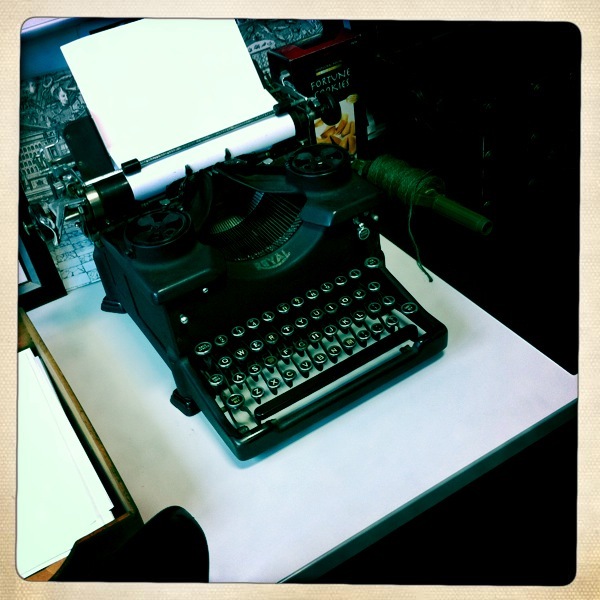
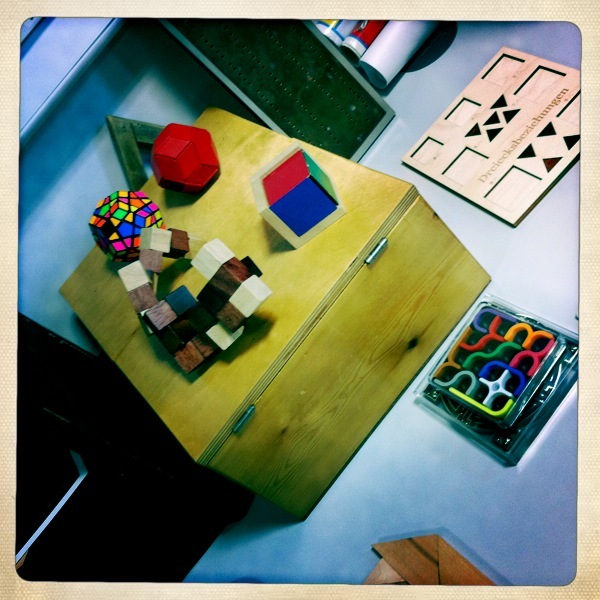
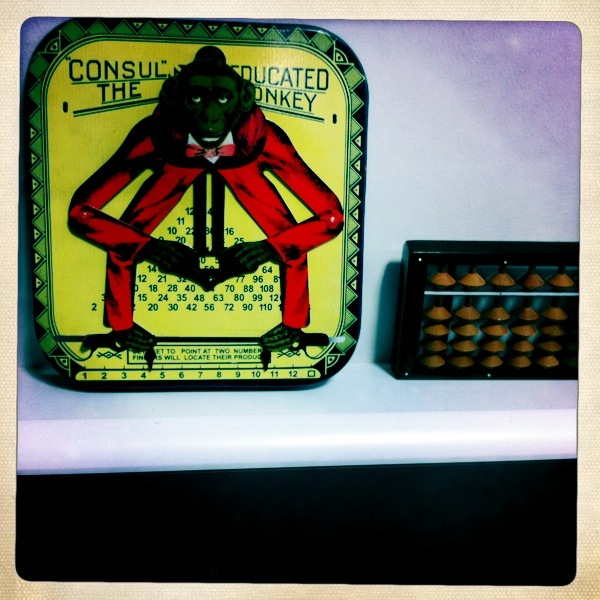
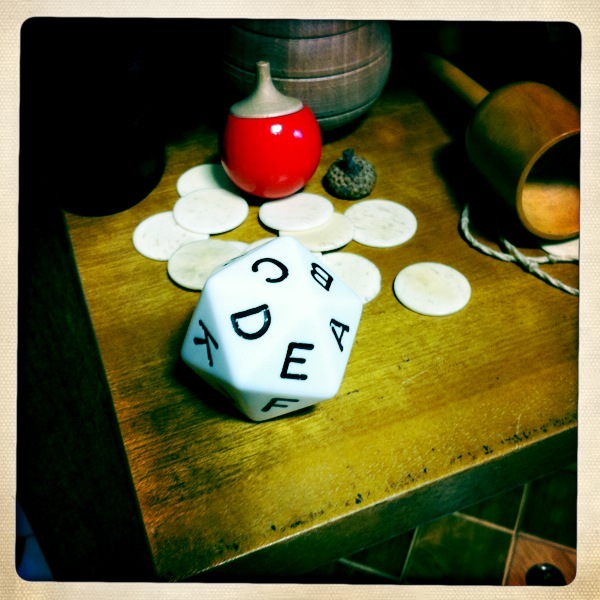
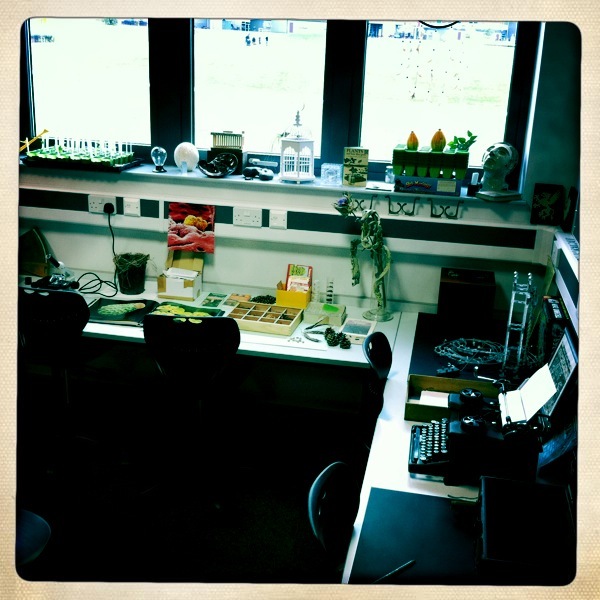
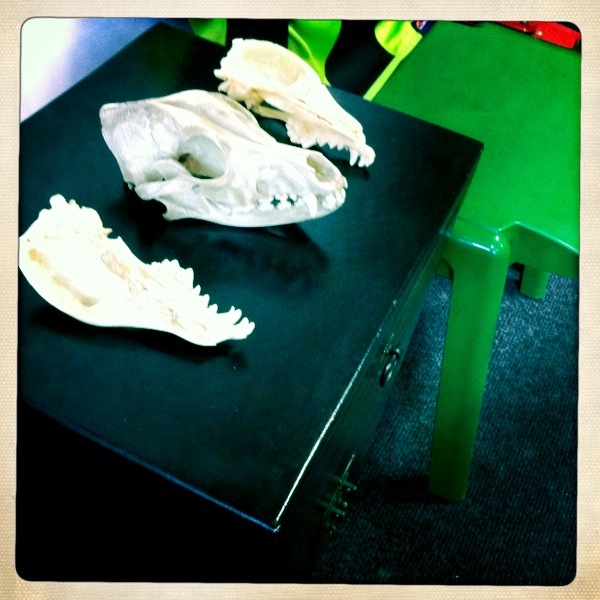
On Wednesday, I had the pleasure of meeting an Agent Of Wonder. Really. That’s his job title. I think that he must be the only “Agent of Wonder” in the UK Education system, if not the world. Dr Matthew McFall is an extraordinary man. He is leading an amazing project in a school that aims explicitly to foster curiosity across the whole school community. He has created a ‘Wonder Room’ which is packed full of interesting, unusual, out-of-time, out-of-context, thought-provoking objects (see photos). All members of the school community are encouraged to come into the room and simply explore, think and marvel at the objects on display. There are puzzles of all descriptions, abstract photographs, petrified animals, a typewriter, illustrated books, keys upon keys upon keys…

He held up a woolly mammoth bone. He explained that he had carried the bone around the school, inviting students to suggest what it might be. He invited them to look closely, to hold it, feel it and to sense it properly. Once they had decided that it was a bone, he asked them to look even closer, pointing out two distinct bulges; “What do you think happened here?”… “This mammoth must have had a tough life, don’t you think? A couple of serious blows that resulted in breaking his/her rib in two places…I wonder what sort of character the mammoth needed to be?” And then he went on his way, leaving students to imagine and to wonder.

When we were there, Dr Magic (for he also does magic tricks…well why wouldn’t he?), had just been into a Year 7 English lesson to work alongside the teacher and the group on developing their curiosity using appropriate objects from the wonder room to enhance their imagination and creative writing. Delightful.

I wish I could have reversed my week. If only I could have shared this very deliberate ‘curious-learning’ methodology with the group of teachers I met on Monday. I am sure that they would have loved it just as much as I did! What a great way to encourage learners to take those intellectual risks..to imagine…to question, to speculate and to take those much needed but very risky intellectual leaps of faith into the world of ‘there are no stupid questions; so have a go and enjoy seeing what happens.’ Now there’s a route to full on learning.

 

Learning-by-the-Sea

I’m on the South Coast this evening ahead of meeting and sharing ideas with a school here tomorrow. I love being near the sea and the British Isles never cease to amaze me with the colour and contrast it can provide.By the way, I noticed a theme is emerging when I am on the road. It would seem I have a weird need to document where I eat! I think my next book will be entitled “Dinner for one: the travelling learning geek”
Tomorrow should be good.

Img_0597
Img_0601
Img_0611
Img_0613
Img_0609

Changing Paradigms Sir Ken Robinson RSA Animate Series

I first came across Sir Ken Robinson a fair few years ago. My epiphany moment in my own educational thinking came about when I watched his first TED talk “How schools kill creativity”. It was one of those moments when I can remember where I was, who I was with and, most importantly, how it made me feel and think. This talk gave me a ‘peg’ upon which to hang everything I believed about what education should be for. From then, I have worked hard to hang my thinking and actions on that peg and it is working out very well indeed.

This RSA Animate is a further 10 minute think-piece from SKR one which I will use to nurture my thoughts and shape my educational practice. I hope you enjoy it. 

Purposeful quality learning experiences

I had the great pleasure to attend part of a whole-staff INSET today in one of the schools I work with and, as ever, it delivered an amazing array of wonderful learning experiences. It’s days like today that I really love my job. To be able to spend time with a such a fabulous, enthusiastic group of educators is a joy. I recommend to parents and employers, if you ever get the chance, to visit and watch what happens when teachers get the time to learn and develop together. The quality focus on learning was tangible in every conversation, every development and every idea that was generated. The will to progress the learning of every member of the school community though enhancing the relationships between students and teachers was impressively matched by the wealth of skill on display during the morning.

With everything else changing so radically and unpredictably in the world right now, I begin my weekend reassured that the purposeful and innovative ground is peopled with learning-entreupeneurs like those with whom I spent time today. Thank you.